

Why we don't sell the cheapest membrane
BWR ply versus MDF, PU versus laminate, and where the money in a kitchen quote actually goes.
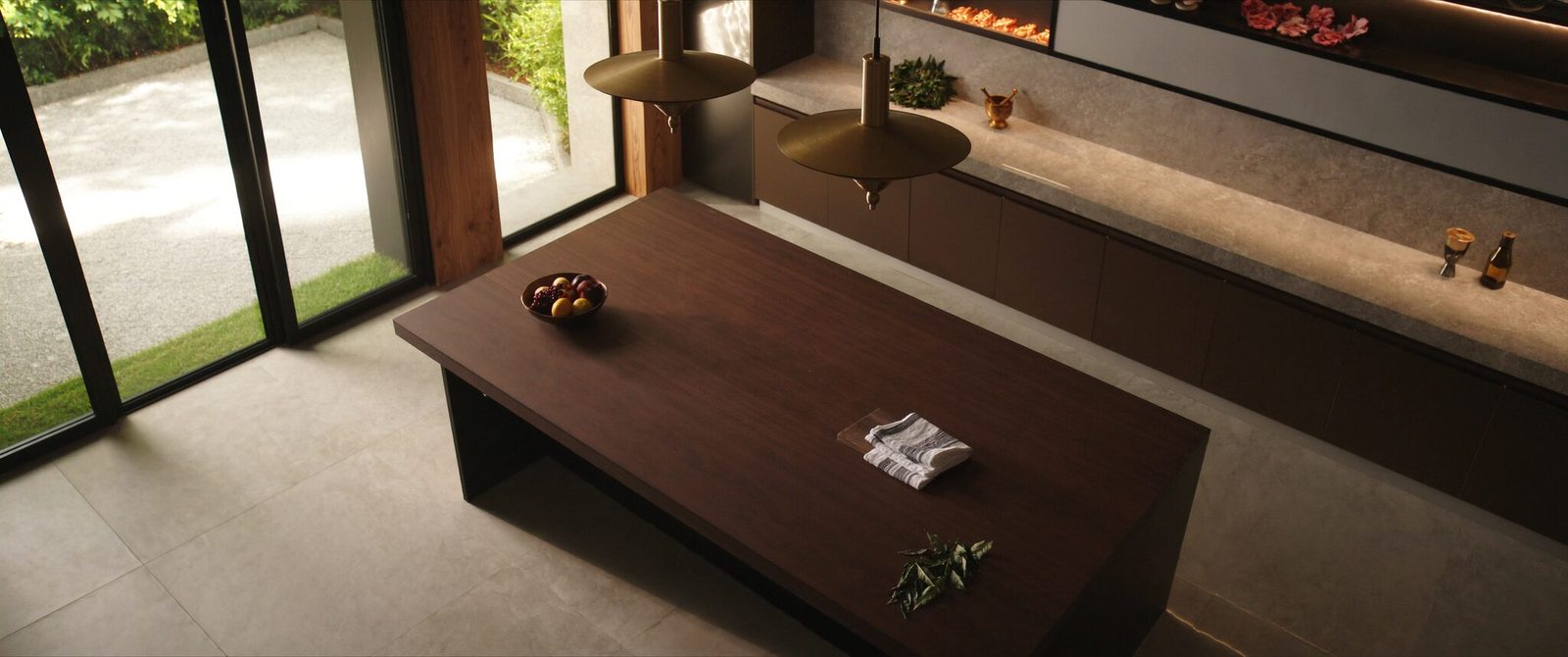
Every kitchen quote in the tricity looks roughly the same on the first page — layout, finishes, a number at the bottom. The difference between a kitchen that lasts and one that doesn't is almost never on that page. It's in the board behind the shutter, the glue on the edge, and the hardware you never see.
Ply, MDF, and where moisture wins
A modular kitchen lives in the most abused room in the house — heat, steam, oil, and in Punjab, a monsoon that finds every unsealed edge. BWR (boiling-water-resistant) plywood shrugs that off for years. Cheaper MDF or non-BWR board drinks it in, swells at the edges, and starts to sag around the sink within a season or two. We build carcasses in BWR ply for exactly that reason — it's the part you never see, and the part that decides how long the kitchen survives.
Finishes: what you're actually paying for
A membrane (vinyl-wrapped) shutter is the cheapest face on the market, and for a low-traffic cabinet it's fine. But heat lifts the film at the edges over time, and once it peels there's no fixing it — only replacing. PU and acrylic finishes cost more because they're sprayed or bonded, not wrapped, so there's no film to peel. Laminate sits in between. None of this is a trick; it's just what each option is and isn't.
The cheapest membrane isn't a bad product. It's the wrong product for the one room that never gets a rest.
So when a quote comes in noticeably cheaper than ours, it usually isn't sharper pricing — it's a different board, a thinner edge, or hardware that gives up in a year. We would rather show you the trade-off and let you choose it than hide it and hope you don't open a cabinet in two summers.
Thinking about your own kitchen?
Tell us about the room. We'll come back with a plan, a price and a date.
Start a project